
A conversation about food, mental health, identity, inherited patterns, and the stories we've been told about ourselves.
Before I became a dietitian, I was a kid growing up between cultures, languages, expectations, and identities. Long before I learned about protein, fiber, blood sugar, or metabolism, or any science thing for that matter I learned something many of us learn early: That our bodies are constantly being watched.
Measured.
Compared.
Judged.
Praised.
Corrected.
I learned that some bodies are celebrated while others are treated like problems to solve.
And if I'm being honest, I don't think most of us learned that lesson from nutrition.
We learned it from family members who were trying to protect us.
From doctors.
From schools.
From magazines.
From wellness culture.
From racism.
From colonialism.
From capitalism.
From systems that have spent generations deciding which bodies deserve belonging and which bodies need to be fixed.
As a dietitian, people often come to me wanting help with food.
But food is rarely just about food.
It's about grief.
Identity.
Family.
Culture.
Safety.
Control.
Belonging.
And sometimes yes food is just food.
It's about the stories we've inherited and the ones we're still carrying.
And that's why I was so excited to sit down with Dr. Quỳnh-Hương Nguyễn (She/They/Chi/Chanh), mental health life coach and founder of Pattern Pivot.
Because both of us spend our days helping people untangle something deeper than behavior.
We help people get curious about patterns.
Not because people are broken.
But because patterns tell stories.
Stories about what we've survived.
Stories about what we've learned.
Stories about who we had to become to make it through.
And sometimes those stories are much bigger than us.
Maybe you learned that being smaller would make your life easier.
Maybe you learned that success and thinness were interchangeable.
Maybe you learned that food was love.
Or scarcity.
Or comfort.
Or survival.
Maybe your body has been scrutinized because you're fat, queer, disabled, neurodivergent, Indigenous, Latine, Black, Asian, trans, racialized, or living at the intersections of several identities at once.
Maybe you've spent years trying to become someone who would finally be acceptable to the world around you.
And maybe you're tired. No, not tired, exhausted.
If that resonates, you're not alone.
One of the things Dr. Nguyễn and I discuss is what becomes possible when we stop asking:
"What's wrong with me?"
And start asking:
"What happened?"
What messages did I inherit?
What systems shaped my beliefs?
What expectations am I carrying that were never mine to begin with?
What patterns made sense when they were created?
And what might be possible now?
Because when we widen the lens, something important happens.
We begin to understand that many struggles we experience as personal failures are actually deeply connected to the environments we live in.
The healthcare system.
Diet culture.
White supremacy.
Patriarchy.
Ableism.
Capitalism.
The family stories we inherited.
The cultural stories we inherited.
The survival strategies we inherited.
None of this means personal responsibility disappears.
It means context matters.
And context changes everything.
Over the coming months, Dr. Nguyễn and I will be exploring the intersections of nutrition, mental health, body image, identity, fatphobia, healing, and liberation.
We'll talk about the people who are often missing from these conversations.
Fat people.
Queer and trans people.
Disabled and neurodivergent people.
Immigrants and children of immigrants.
People of color.
Caregivers.
Helpers.
People whose lives don't fit neatly into the boxes traditional healthcare was built around. Must I go on?
Most importantly though, we'll keep returning to a question that feels increasingly urgent:
What happens when we stop treating bodies as problems to solve and start understanding them in context?
I hope you'll join us.
Because healing doesn't begin with fixing yourself.
Sometimes it begins with questioning the story you've been told about yourself in the first place…so on that note stay tuned for the upcoming blogs from a great coach to a great amazing friend, Dr. Quỳnh-Hương Nguyễn.
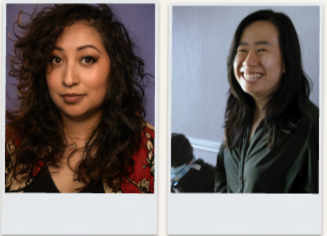
Andrea Hinojosa on the left (that’s me) & Dr. Nguyễn on the right :D
— Andrea Hinojosa (she/her/ella)
